
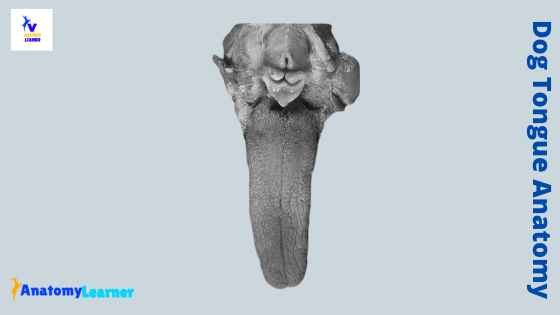
Understanding dog tongue anatomy helps owners notice what is normal and what may need veterinary attention. A healthy dog tongue has a unique structure built for daily tasks like picking up water, moving food, cleaning fur, and controlling body temperature.
After studying canine oral structures, one thing becomes clear: the tongue is much more than a simple body part. Its muscles, surface texture, and blood supply allow dogs to perform many actions that support survival and comfort.

What Is Dog Tongue Anatomy?
Dog tongue anatomy refers to the physical structure and biological parts of a dog’s tongue. The tongue is made of muscle tissue covered by a moist layer called the mucosa. This design gives dogs strength, flexibility, and control.
Unlike humans, dogs use their tongues for many survival tasks. A dog can use its tongue to lap water, move food around the mouth, clean its body, and release heat through panting.
- ✦ Muscular design
The dog tongue contains several muscles that allow quick movement and precise control.
- ✦ Protective surface
The outer covering protects the tongue while helping with sensation and food handling.
- ✦ Multiple functions
The tongue supports eating, drinking, cooling, grooming, and communication.
Main Parts of a Dog Tongue
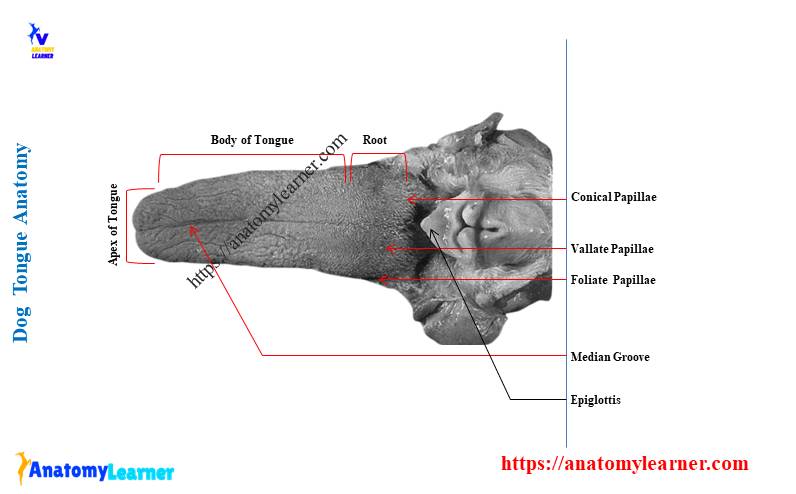
The structure of a dog’s tongue includes several important parts. Each part has a role that helps the animal eat, drink, and interact with its environment.
The front, middle, and back areas of the tongue work together. The tip is highly mobile, while the deeper sections provide strength and support.

- ✦ Tip of the tongue
The tip is flexible and helps dogs collect water and pick up small pieces of food.
- ✦ Body of the tongue
The middle section contains muscles that create movement and support chewing.
- ✦ Root of the tongue
The root connects the tongue to deeper tissues in the throat and provides stability.
Tongue Muscles and Movement
Dog tongue muscles are arranged in a way that allows movement in many directions. These muscles help dogs curl, flatten, lift, and pull back the tongue.
This control is important when dogs drink water. They use a fast lapping motion that creates a small column of water and pulls it into the mouth.
- ✦ Internal muscles
These muscles change the shape of the tongue without moving its attachment point.
- ✦ External muscles
These muscles move the tongue forward, backward, and sideways.
Papillae: The Rough Surface of a Dog Tongue
One of the most noticeable features of dog tongue anatomy is the rough surface. This texture comes from tiny structures called papillae.
Papillae help dogs handle food and improve grip. Some papillae also contain taste receptors that help dogs detect different flavors.

- ✦ Mechanical papillae
These structures help move food and create the rough tongue texture.
- ✦ Taste papillae
These contain taste receptors that help dogs sense flavors.
- ✦ Grooming support
The tongue surface helps remove dirt and loose hair during grooming.
Why Does a Dog Tongue Feel Rough?
A dog’s tongue feels rough because of its specialized papillae. These small structures are different from the smooth surface of a human tongue.
The rough texture helps dogs perform natural behaviors like cleaning their coat and moving food through the mouth.
How a Dog Tongue Helps With Cooling
Dogs do not cool their bodies by sweating like humans do. Instead, they rely heavily on panting, where air moves across the tongue and mouth.
During panting, moisture on the tongue evaporates. This process helps lower body heat, especially after exercise or during warm weather in the United States.

- ✦ Panting process
Rapid breathing moves air over the tongue and helps evaporation occur.
- ✦ Blood circulation
Blood vessels in the tongue help exchange heat during cooling.
Why Dogs Stick Their Tongues Out
A dog may stick out its tongue after running, playing, or spending time outside. This is often a normal cooling response.
However, extreme panting, tongue changes, or breathing problems may need a veterinarian’s evaluation.
Dog Tongue Color and Health Signs
A healthy dog tongue is usually pink, although some breeds may naturally have dark spots or different pigmentation. Knowing your dog’s normal tongue appearance makes changes easier to notice.
Veterinarians often check the tongue and gums during oral exams because color changes can sometimes point to health concerns.

- ✦ Pink tongue
A normal pink color usually shows healthy blood flow and oxygen supply.
- ✦ Pale tongue
A pale tongue may be linked with circulation or blood-related concerns.
- ✦ Blue or purple tongue
A blue or purple color can indicate reduced oxygen and needs quick attention.
Checking Your Dog’s Tongue at Home
Owners can gently check their dog’s tongue during normal care routines. Look for unusual swelling, sores, strong odor, or sudden color changes.
Regular checks work best when combined with dental care and routine veterinary visits.
Common Dog Tongue Problems
Even though the tongue is strong, it can develop problems. Injuries, infections, foreign objects, and growths may affect tongue health.
Early attention can prevent small problems from becoming more serious. A veterinarian can identify the cause and recommend treatment.
- ✦ Cuts and injuries
Sharp objects or rough play can cause tongue wounds.
- ✦ Inflammation
Swelling or redness may occur because of infection or irritation.
- ✦ Oral growths
Unusual lumps should be checked by a veterinary professional.
Keeping a Dog Tongue Healthy
Good oral care supports healthy dog tongue anatomy. Brushing teeth, providing safe chew options, and scheduling veterinary exams all help protect the mouth.
A clean mouth reduces the chance of harmful bacteria affecting oral tissues.
- ✦ Dental routine
Regular brushing helps maintain overall mouth health.
