
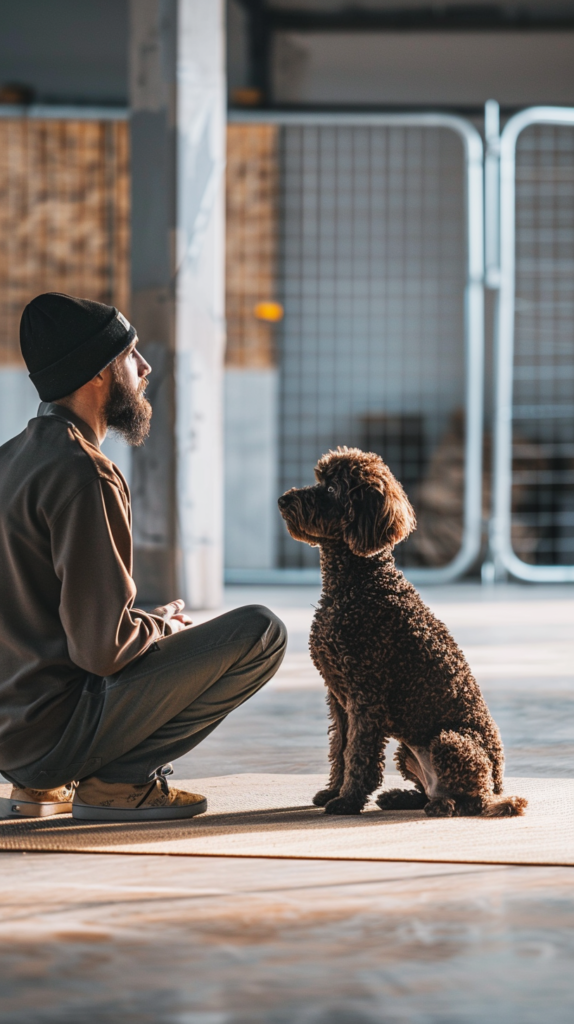
Poodles are known for their sharp minds and strong desire to work with people. In my experience studying dog training methods, the biggest change happens when owners stop repeating commands and start building a true communication system with their dogs.
Effective Poodle training motivation and cue response is not about forcing obedience. It is about finding what drives your Poodle, creating clear expectations, and making every training session easy to understand. This approach works well for American families who train dogs at home, in parks, and during daily routines.

Understanding Poodle training motivation and cue response
Poodle training motivation and cue response describe how a Poodle reacts to learning signals and chooses to perform a behavior. Motivation is the reason your dog wants to respond, while cue response is the action that follows a command.
A motivated Poodle does not simply obey because of a command. The dog connects the cue with a positive result, such as praise, play, food, or attention. This connection makes training faster and more reliable.
- ✦ Motivation
The internal reason that encourages a Poodle to learn and repeat a behavior.
- ✦ Cue response
The dog’s ability to understand and act after hearing or seeing a specific signal.
Why Poodles often respond well to training
Poodles were bred as working dogs, and many still enjoy tasks that challenge their minds. They often pay close attention to human actions and quickly notice patterns.
This natural ability helps owners teach commands, tricks, and household behaviors when training stays positive and consistent.
- ✦ High awareness
Poodles often notice body language, voice changes, and training routines.
- ✦ Problem-solving ability
Many Poodles enjoy finding solutions, especially when learning feels like a game.
Finding the right motivation for your Poodle
Every Poodle has different reasons to work. Some dogs love treats, while others respond better to toys, praise, or interactive play. Good trainers test different rewards instead of assuming every dog wants the same thing.
Poodle training motivation and cue response become stronger when the reward matches the dog’s personality. A food-loving Poodle may learn quickly with small treats, while a playful Poodle may prefer a short game after completing a task.
- ✦ Food rewards
Small, healthy treats can create fast learning during new skill training.
- ✦ Social rewards
Many Poodles enjoy praise, touch, and attention from their owners.
- ✦ Play rewards
Toys and games can motivate energetic Poodles during active training.
How clear cues improve Poodle obedience
A cue is a signal that tells your Poodle what behavior you want. Common cues include words like sit, stay, come, and leave it. The best cues are simple, consistent, and easy for your dog to recognize.
Many training problems happen because owners change words, tone, or body movements. A Poodle may appear stubborn when the real issue is unclear communication.
- ✦ Use one cue at a time
Give one clear command and allow your Poodle time to respond.
- ✦ Keep your words consistent
Use the same command every time to avoid confusion.
- ✦ Reward correct timing
Reward the behavior immediately so your Poodle understands the connection.
Building stronger recall response
Recall training teaches your Poodle to come when called. This skill is important for safety during walks, outdoor activities, and family trips.
Start in a quiet area and slowly increase distractions. Reward your Poodle every time the dog responds correctly.
- ✦ Begin with low distractions
Quiet spaces help your Poodle focus before facing harder situations.
Using positive reinforcement for better learning
Positive reinforcement means rewarding behaviors you want to see again. This method helps create a willing learner instead of a dog that only reacts to pressure.
Poodle training motivation and cue response improve when the dog feels confident during lessons. Confidence helps your Poodle try new behaviors without fear of mistakes.
- ✦ Reward effort
Celebrate small steps when teaching complex behaviors.
- ✦ Avoid long sessions
Short training periods help maintain focus and interest.
The importance of timing
Dogs learn from immediate feedback. If a reward comes too late, your Poodle may not understand which action earned it.
Good timing creates a clear link between the cue, behavior, and reward.
Common reasons Poodles ignore cues
Even intelligent Poodles can fail to respond when training conditions are difficult. A dog may ignore a cue because of distractions, stress, unclear signals, or low motivation.
Understanding the reason behind the behavior helps owners solve problems instead of repeating commands louder.
- ✦ Too many distractions
Busy places can make it harder for a Poodle to focus.
- ✦ Low reward value
The reward may not be interesting enough for that specific dog.
- ✦ Confusing signals
Mixed commands can slow down learning progress.
Creating a daily training routine for better results
Consistency builds reliable behavior. A few minutes of daily practice often works better than one long weekly session.
American dog owners can include training in normal activities like walks, feeding time, and play sessions. This turns learning into a natural part of life.
- ✦ Morning practice
Use calm morning moments for simple obedience exercises.
- ✦ Walk training
Practice attention and leash manners during outdoor time.
- ✦ Evening review
Repeat successful skills to strengthen memory.
