
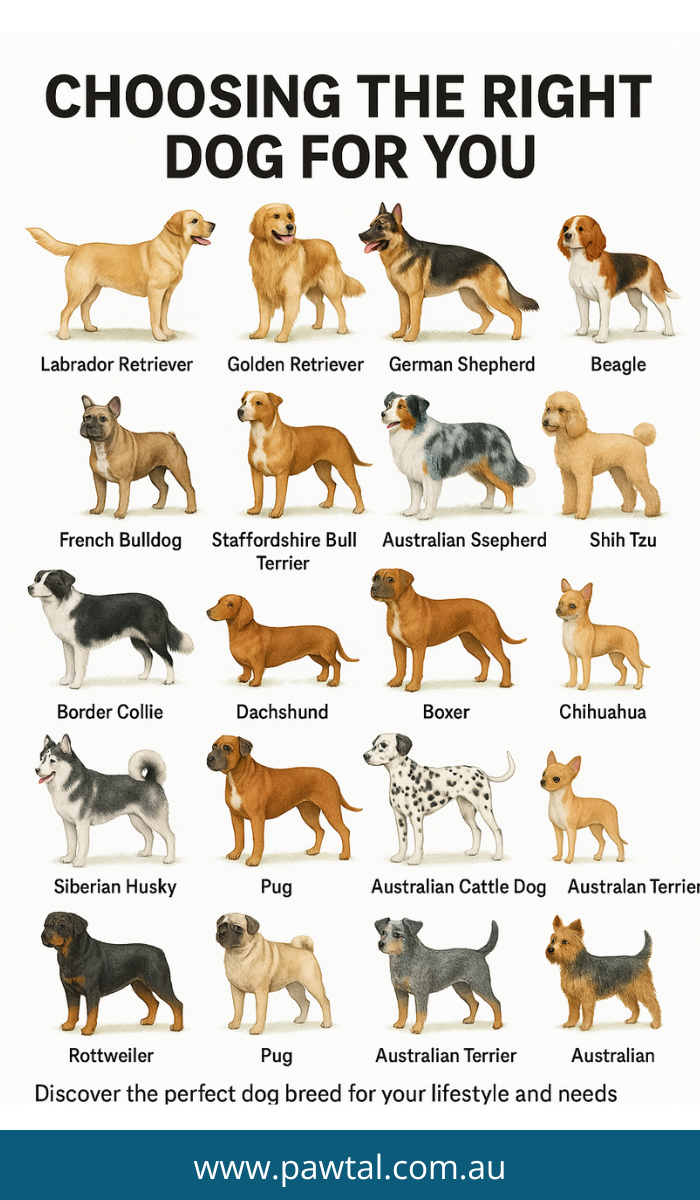
Choose a dog breed that matches your lifestyle, time, home, and care ability.
A Dog breed selection guide is not about finding the most popular dog. It is about finding the right match. A dog that fits your routine is more likely to stay healthy, happy, and connected with your family.
Over the years, I have learned that many dog owners choose breeds because of looks first. Later, they discover that energy level, training needs, and daily care matter much more. A calm family may struggle with a high-energy working breed, while an active owner may enjoy that same breed.

Understand why dog breed selection matters
Choosing a dog affects many years of your life. Dogs bring friendship, activity, and emotional support, but each breed has different needs.
A proper Dog breed selection guide helps you look beyond appearance. It considers behavior, size, exercise, training, and health before you make a decision.

- ✦ Lifestyle match
Your daily schedule should fit the dog’s natural energy and social needs.
- ✦ Long-term commitment
Different breeds may require different levels of grooming, training, and medical care.
Avoid choosing only by appearance
A beautiful dog may not always be the easiest dog for your home. Looks do not show exercise needs, personality, or training challenges.
Evaluate your lifestyle before choosing a breed
Your routine is one of the strongest clues when selecting a dog. A person who enjoys hiking may prefer a different breed than someone who lives in an apartment and works long hours.
In the United States, many families balance work, school, and home life. The right breed should fit into that schedule instead of creating constant stress.

- ✦ Activity level
Active breeds often need daily walks, play, and mental challenges.
- ✦ Living space
Apartment living can work for many dogs if their exercise and behavior needs are met.
- ✦ Available time
Some breeds need more training, grooming, and human interaction than others.
Consider your family situation
Families with children, seniors, or other pets should consider temperament and social behavior. A gentle and patient dog may be a better fit for some homes.
- ✦ Children
Choose breeds known for patience and teach children safe interaction.
Compare dog breed size and physical needs
Size affects food costs, exercise needs, travel, and home comfort. Small dogs may need less space, but some still have high energy.
Large dogs can be wonderful companions, but owners must prepare for higher food needs, stronger equipment, and more space.

- ✦ Small breeds
Often fit smaller homes but may still need training and daily activity.
- ✦ Medium breeds
Many medium dogs balance energy, size, and adaptability.
- ✦ Large breeds
They often need more space, exercise, and careful handling.
Think about adult size, not puppy size
Many puppies look small and easy at first. A responsible Dog breed selection guide always considers the adult dog’s final size and needs.
Match temperament with your expectations
Temperament describes how a dog usually responds to people, animals, training, and new situations. It is one of the most important parts of breed selection.
Breed tendencies provide clues, but each dog is an individual. Early socialization, training, and environment also shape behavior.

- ✦ Companion breeds
Often enjoy close human interaction and family time.
- ✦ Working breeds
Usually need tasks, training, and mental stimulation.
- ✦ Sporting breeds
Often enjoy active play and outdoor activities.
Energy level matters every day
A mismatch in energy can create problems. A high-energy dog without enough activity may become bored and develop unwanted habits.
Review grooming, health, and maintenance needs
Every dog requires care, but the amount can vary greatly. Coat type, health history, and age affect daily responsibilities.
A good Dog breed selection guide includes realistic planning for grooming visits, veterinary care, exercise, and nutrition.

- ✦ Grooming
Long coats may need regular brushing and professional care.
- ✦ Health concerns
Research common breed health issues before choosing.
- ✦ Costs
Plan for food, supplies, training, and medical expenses.
Purebred and mixed breed considerations
Both purebred and mixed breed dogs can become excellent companions. The most important factor is finding a healthy dog with a suitable personality.
Create a practical dog breed comparison checklist
Before bringing home a dog, compare your options carefully. Write down your priorities instead of making a quick emotional choice.
A simple checklist makes the Dog breed selection guide process easier and helps you avoid future problems.

- ✦ Ask these questions
Can I provide enough exercise, training, attention, and healthcare for this breed?
- ✦ Meet the breed
Spend time with adult dogs when possible to understand their behavior.
Research reliable sources
Speak with veterinarians, experienced owners, and responsible breeders or shelters. Real experiences often reveal details that basic breed descriptions miss.
