
Dogs spend many hours resting each day, and the way they sleep can tell owners a lot about their daily life. From a Labrador stretched across the floor to a small puppy curled into a ball, every dog has a preferred sleeping style.
After observing dogs in homes, shelters, and training environments, experts often use sleep habits as one small clue to understand comfort and behavior. Dog sleeping positions are not a perfect language, but they can help you notice patterns and changes.
For many U.S. dog owners, sleep is part of a healthy routine. A comfortable bed, calm home, and safe space can help dogs relax and get better rest.

Why dogs sleep in different positions
Dog sleeping positions change based on comfort, environment, personality, age, and physical needs. A dog may choose one position during a warm afternoon and another position at night when the room is cooler.
Dogs also use sleep positions to control body temperature and protect sensitive areas. Their ancestors needed awareness while resting, so some natural sleeping habits remain today.
- ✦ Comfort
Dogs often choose positions that help them relax their muscles and feel secure.
- ✦ Temperature control
Curling up helps keep warmth, while spreading out helps release body heat.
- ✦ Safety and trust
A relaxed sleeping posture may show that a dog feels safe in its environment.
How sleep environment affects dog sleeping positions
A dog’s bed, room temperature, noise level, and family routine can influence sleep posture. A dog that feels calm may sleep in more open positions.
If a dog suddenly avoids a favorite sleeping position, owners should look for other changes such as reduced activity or signs of discomfort.
Common dog sleeping positions and their meanings
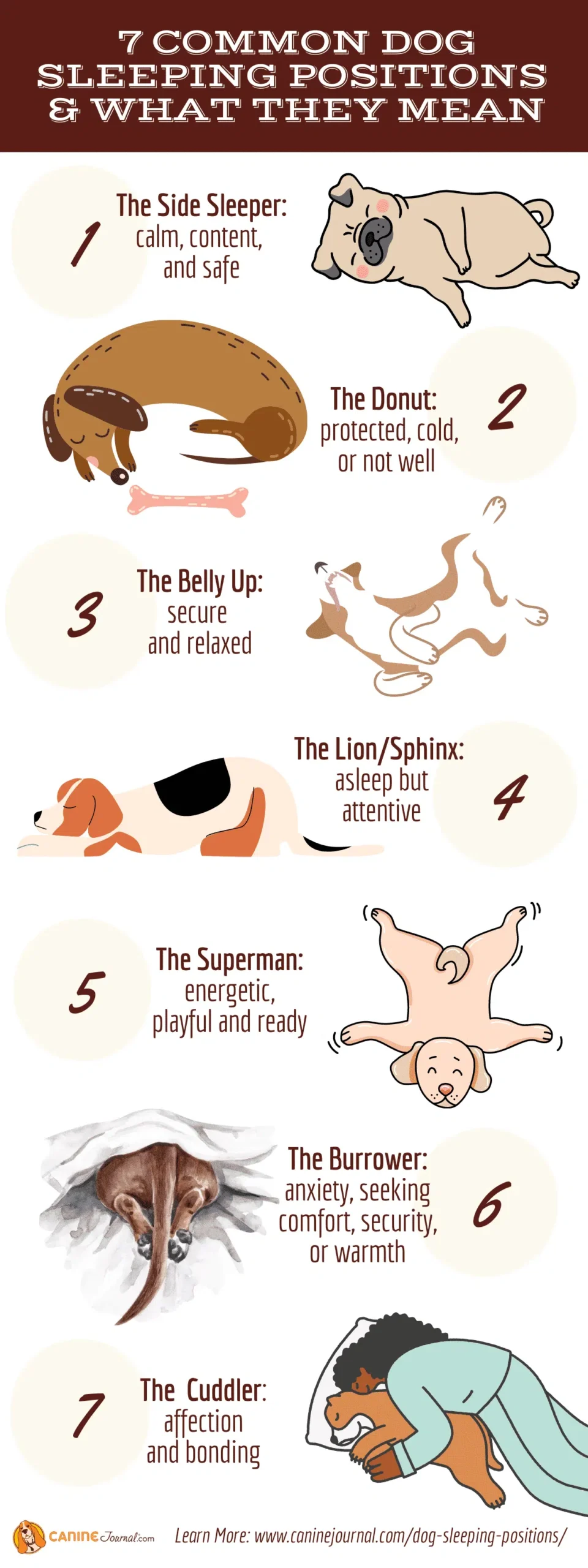
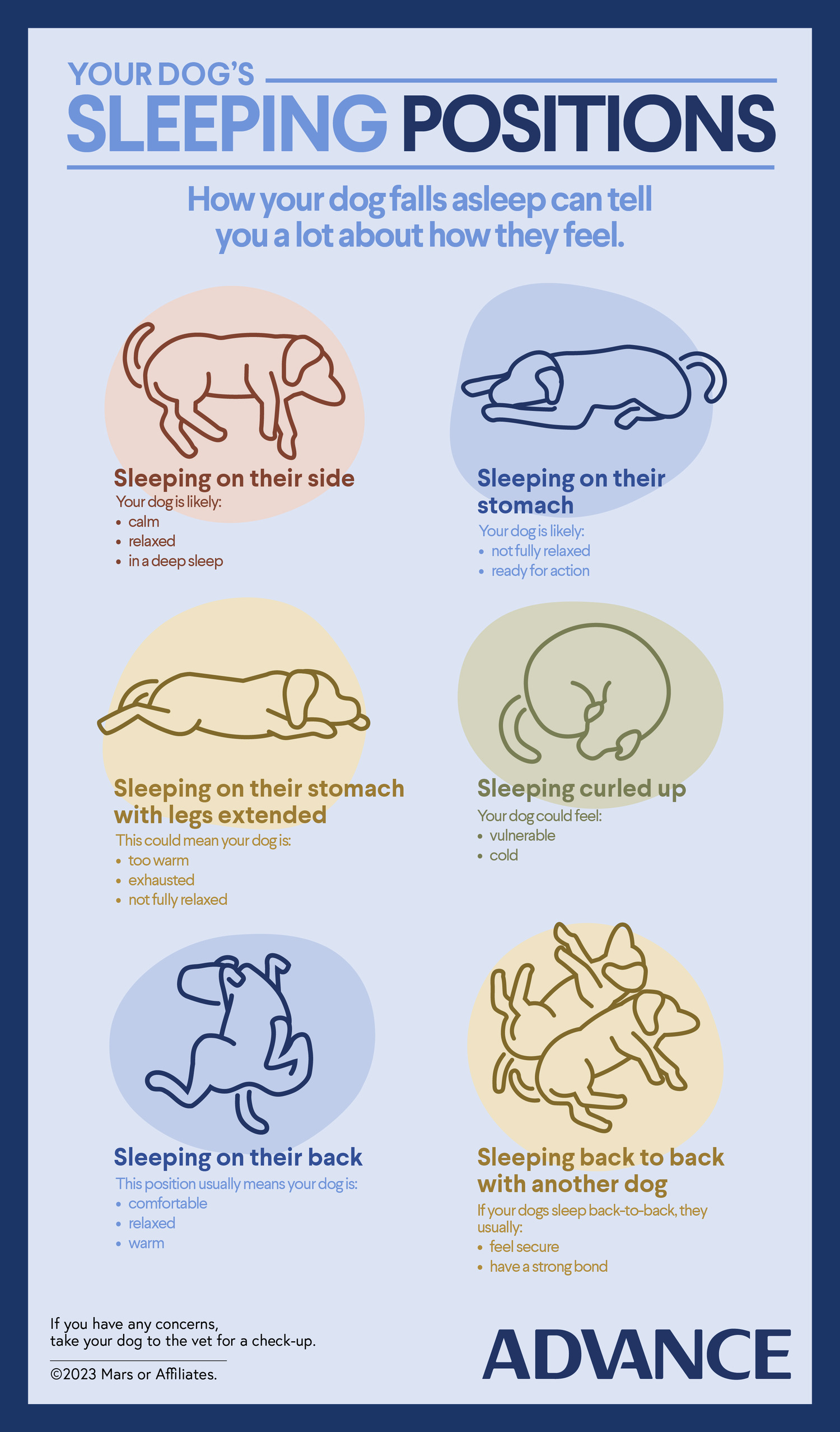
The most common Dog sleeping positions include curled up, side sleeping, belly sleeping, and sleeping on the back. Each position has a simple explanation, but every dog is different.
Owners should look at the whole picture. A happy dog that sleeps in many positions is usually showing normal behavior.

- ✦ The curled-up position
Dogs curl into a ball to save warmth and protect their body. This is common during colder nights.
- ✦ The side sleeper
A dog sleeping on its side often feels relaxed and comfortable.
- ✦ The belly sleeper
Dogs that lie on their stomach may be ready to move quickly while still resting.
- ✦ The back sleeper
A dog showing its belly while sleeping often feels very secure.
What a curled-up sleeping position means
The curled-up position is one of the most common Dog sleeping positions. Dogs tuck their legs under their body and wrap their tail around themselves.
This position can help dogs stay warm and feel protected. Many puppies and smaller breeds use this style because it provides a cozy feeling.
A curled position alone does not mean a dog is scared or unhappy. It is often a normal way to rest.
- ✦ Warmth
The body shape helps reduce heat loss during sleep.
- ✦ Protection
The position covers the belly and important body areas.
What sleeping on the side tells you about your dog
Side sleeping is a relaxed posture where a dog lies with legs extended. Many dogs choose this position when they feel safe at home.
This Dog sleeping position often appears after exercise because the body can fully relax. Dogs may also switch between side sleeping and other positions throughout the night.

- ✦ Deep relaxation
A loose body posture often shows that the dog is comfortable.
- ✦ Healthy routine
Regular side sleeping can be part of normal rest behavior.
Dog sleeping positions that may show comfort and trust
Some Dog sleeping positions show a high level of comfort. Sleeping on the back with paws up, leaning against a person, or stretching fully across a room can happen when dogs feel secure.
A dog that sleeps close to family members may enjoy social connection. However, each dog has its own personality, so avoid making assumptions from one sleeping habit alone.

- ✦ Belly-up sleeping
The exposed belly can indicate relaxation because the dog is not guarding its body.
- ✦ The cuddle position
Sleeping beside people or pets can show comfort and companionship.
When changes in dog sleeping positions may need attention
Most changes in Dog sleeping positions are harmless. Dogs may change positions because of weather, activity levels, or a new sleeping area.
However, sudden changes combined with other signs can be worth discussing with a veterinarian. Watch for trouble getting comfortable, stiffness, crying, or unusual tiredness.
- ✦ Watch for pain signs
Difficulty lying down or getting up may suggest discomfort.
- ✦ Notice behavior changes
Changes in appetite, energy, or mood can provide more context.
Helping your dog sleep better
A clean bed, regular routine, enough exercise, and a quiet resting area can support better sleep. Senior dogs may need softer bedding that supports joints.
Good sleep habits help dogs stay active and balanced throughout their lives.
- ✦ Comfortable bedding
Choose a bed that matches your dog’s size and sleeping style.
