
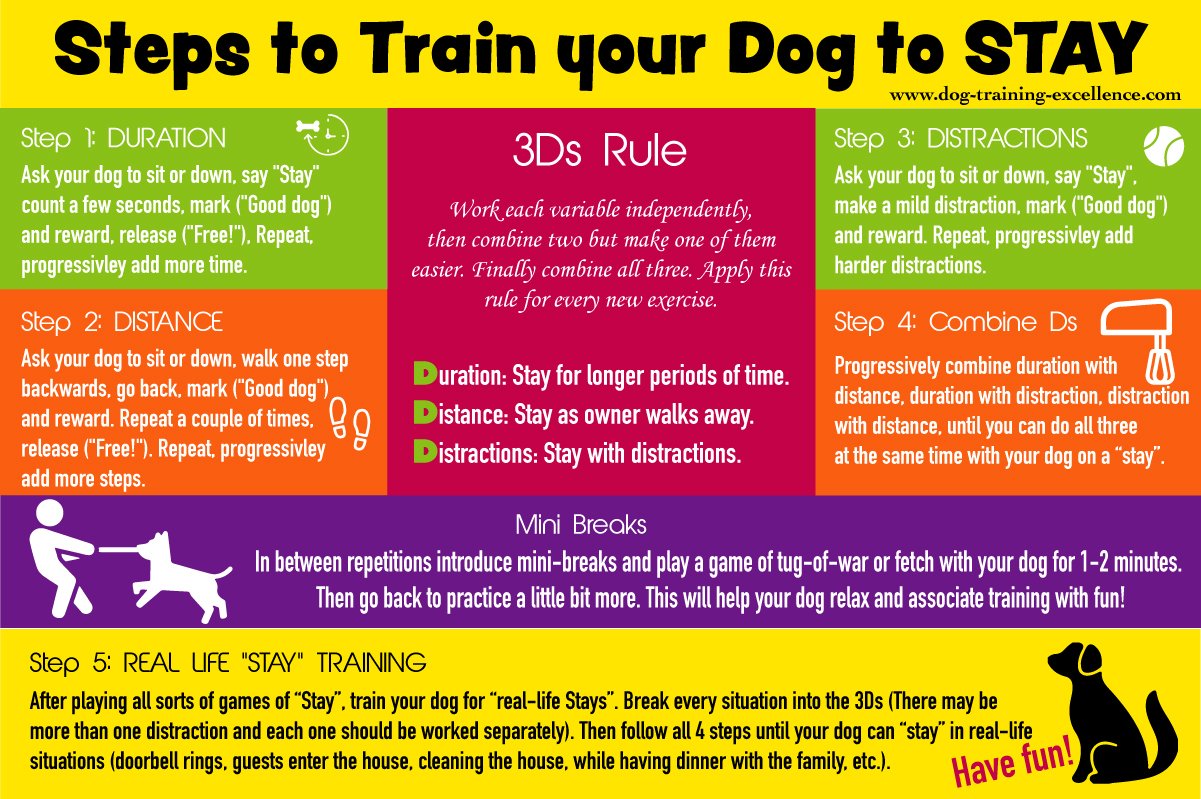
A strong stay command is one of the most useful skills a dog can learn. In the United States, many dog owners use stay training during busy home routines, outdoor activities, and public situations. A trained dog can wait calmly near doors, sidewalks, food bowls, and guests.
From my experience studying dog obedience methods, the best results come from patience and small steps. Dogs do not learn stay by being forced to remain still. They learn when staying brings rewards, trust, and clear communication.

What Is Dog Stay Training and Why Does It Matter?
Dog stay training teaches a dog to hold one position until the owner gives a release word. The dog may sit, lie down, or stand while staying in place.
This command builds impulse control. It helps dogs think before moving and creates safer habits in everyday situations.
- ✦ Better safety
A reliable stay can stop a dog from running through doors, crossing roads, or jumping toward unsafe situations.
- ✦ Improved communication
The stay command gives owners a simple way to guide their dog’s behavior clearly.
How to Start Dog Stay Training Step by Step
Start in a quiet room with few distractions. Your dog should already understand basic commands like sit before learning stay.
Reward small successes first. A dog that stays for two seconds has learned the first part of the skill. Increase time and distance slowly.

- ✦ Step 1: Ask for position
Ask your dog to sit or lie down, then use a calm stay cue.
- ✦ Step 2: Reward quickly
Give praise or a treat while your dog remains still.
- ✦ Step 3: Add a release word
Use a clear word like free or okay so your dog knows when the exercise ends.
Using Positive Reinforcement
Positive reinforcement means rewarding the behavior you want. Treats, praise, and play can motivate dogs without creating fear.
Many trainers use this approach because dogs are more willing to repeat actions that lead to good outcomes.
- ✦ Reward timing
Give the reward while the dog is still staying, not after they walk away.
Common Mistakes During Dog Stay Training
Many owners expect too much too soon. Asking a young puppy to stay for a long time in a busy place can create confusion.
Good training builds confidence. If your dog breaks the stay, simply reset and make the next attempt easier.
- ✦ Increasing distance too quickly
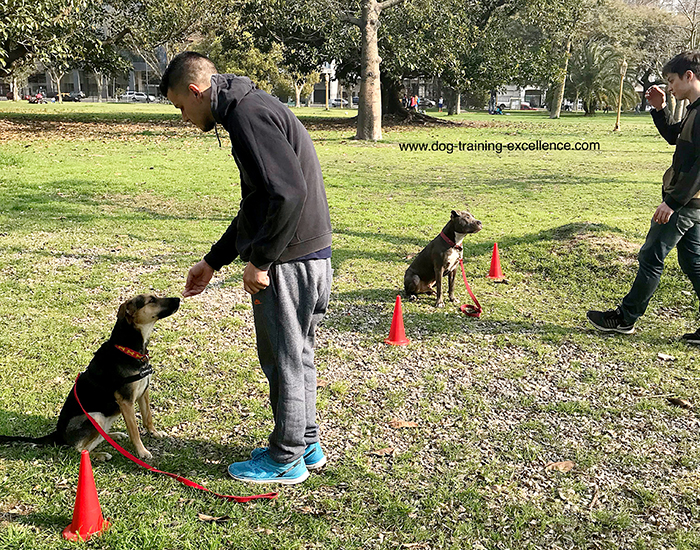
Move away slowly because distance is a harder challenge than time.
- ✦ Repeating the command
Saying stay many times can teach a dog to ignore the first cue.
- ✦ Training with too many distractions
Begin indoors before practicing around people, pets, and outdoor noises.
How Long Does It Take to Teach a Dog to Stay?
The time needed for dog stay training depends on age, personality, breed, and practice consistency. Some dogs understand the basics quickly, while others need more repetition.
Daily practice for a few minutes often works better than long sessions. Dogs learn faster when training stays fun and predictable.
- ✦ Puppies
Young dogs usually need very short stays with frequent rewards.
- ✦ Adult dogs
Older dogs can learn stay with clear steps and regular practice.
Advanced Dog Stay Training With Real-World Distractions
A dog that stays inside the house may still struggle outside. Advanced dog stay training adds distractions like sounds, movement, visitors, and new locations.
Professional trainers often increase difficulty one challenge at a time. This helps dogs succeed instead of becoming overwhelmed.

- ✦ Practice outdoors
Move training to yards, parks, and sidewalks after indoor success.
- ✦ Add movement
Walk around your dog slowly before expecting longer stays.
Building Reliability
Reliability comes from repetition in many places. A dog should understand that stay means the same thing everywhere.
Always reward strong performance, especially when distractions are present.
- ✦ Change locations
Different environments help your dog generalize the command.
Dog Stay Training Tips for Everyday Life
The best training happens when the command becomes part of daily life. Ask your dog to stay before meals, opening doors, or greeting guests.
These small moments create habits. Over time, your dog learns that calm behavior is expected and rewarded.

- ✦ Keep sessions short
Five to ten minutes of focused practice can be effective.
- ✦ Stay calm
Dogs respond better to clear and relaxed communication.
