

The Labrador Retriever breed development and recognition story shows how a working dog can become a trusted family companion. The breed began with practical needs. Fishermen needed strong dogs that could retrieve nets, fish, and game from cold waters.
Over time, careful breeding changed the Labrador Retriever into a balanced sporting dog with a friendly nature. In the United States, Labs became popular for hunting, guide work, search teams, and family life because they combine intelligence with a steady temperament.
When studying Labrador Retriever breed development and recognition, it is important to look beyond popularity. The breed’s success came from purpose-driven selection, clear standards, and generations of responsible breeding.
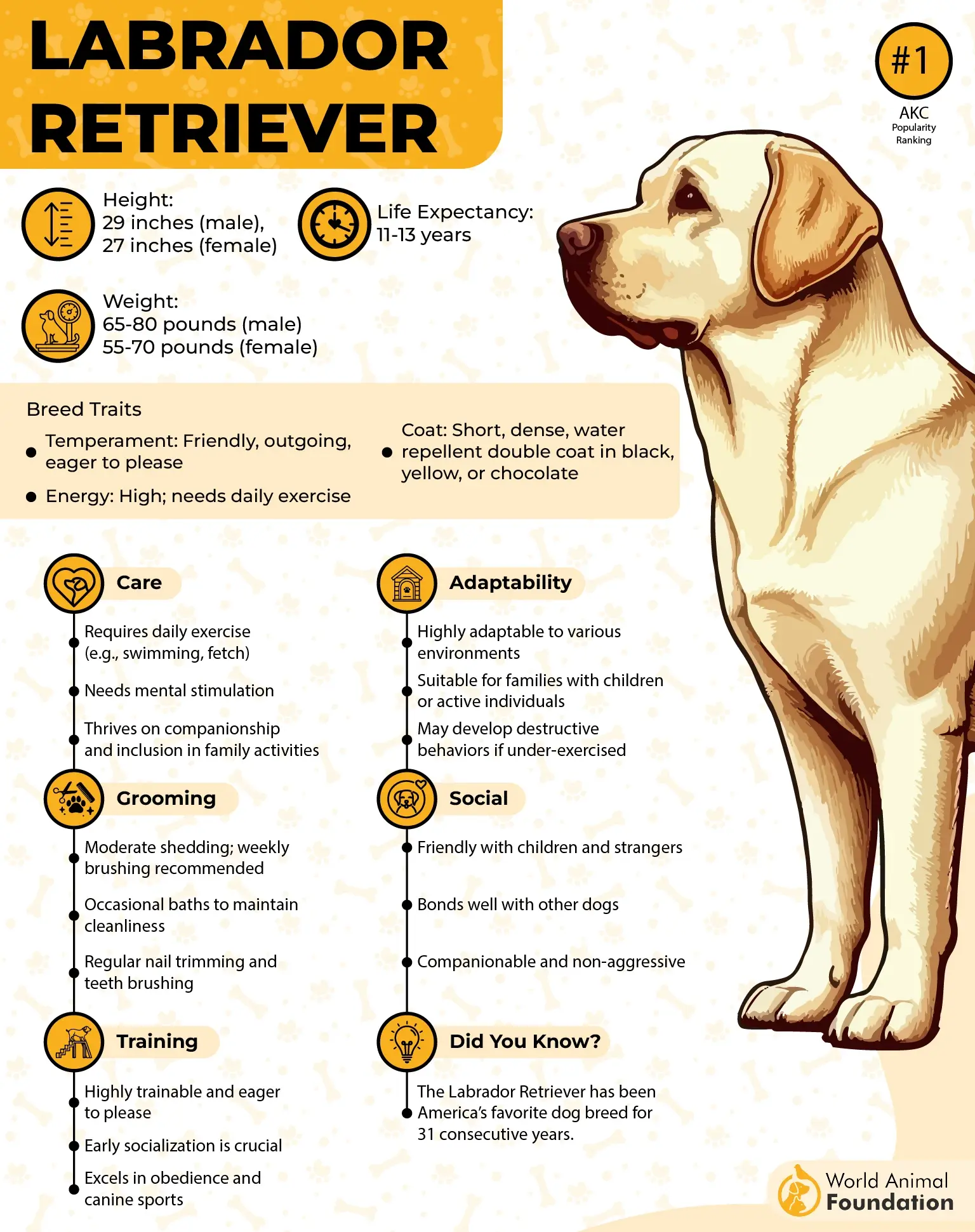
Early origins of the Labrador Retriever breed development and recognition
The Labrador Retriever did not begin in Labrador itself. Its early ancestors came from Newfoundland, Canada, where small water dogs worked alongside fishermen. These dogs helped pull fishing lines and retrieve fish that escaped from nets.
These early working dogs were valued for their swimming skill, endurance, and willingness to work with people. Their dense coats and strong tails helped them perform in cold Atlantic waters.

- ✦ Newfoundland working roots
Early Labrador ancestors helped fishermen with water-based tasks and became known for their retrieving ability.
- ✦ Natural working traits
Strong swimming ability, intelligence, and a soft mouth made these dogs useful hunting partners.
The influence of St. John’s water dogs
The St. John’s water dog played a major role in Labrador Retriever breed development and recognition. These dogs were smaller than many Newfoundland dogs but had excellent retrieving skills.
English sportsmen noticed these abilities and brought some dogs to Britain during the 1800s. There, breeders refined their hunting qualities and created a more standardized retriever.
- ✦ Retrieving foundation
The St. John’s water dog provided the foundation for the modern Labrador Retriever’s working style.
How English breeders shaped the modern Labrador Retriever
British breeders played a key role in Labrador Retriever breed development and recognition. They focused on creating reliable gun dogs for hunting estates.
Breeders selected dogs with strong retrieving instincts, calm behavior, and physical durability. The goal was not just appearance but a dependable working partner.

- ✦ Selective breeding
Breeders chose dogs with useful traits such as intelligence, trainability, and endurance.
- ✦ Sporting purpose
The Labrador became a specialist retriever for hunters who needed accuracy and cooperation.
The rise of Labrador type and consistency
As breeding programs became organized, Labrador Retrievers developed a recognizable body shape and temperament. The breed became known for its broad head, strong body, and friendly expression.
These standards helped separate Labradors from other retriever breeds and supported future kennel club recognition.
- ✦ Breed identity
Consistent traits allowed people to identify Labradors as a distinct breed.
Official recognition and kennel club standards
Official recognition was a major step in Labrador Retriever breed development and recognition. Kennel clubs created written standards that defined ideal size, structure, coat, and temperament.
The Kennel Club in the United Kingdom recognized the Labrador Retriever as a distinct breed in the early 20th century. The American Kennel Club later recognized the breed in 1917.

- ✦ Breed standards
Standards describe the qualities expected in healthy and typical Labrador Retrievers.
- ✦ American recognition
AKC recognition helped increase the breed’s visibility among American hunters and families.
The role of kennel clubs
Kennel clubs helped protect breed identity through registration systems, competitions, and education. They also encouraged breeders to maintain predictable traits.
Recognition did not create the Labrador Retriever, but it provided a formal structure for preserving and improving the breed.
- ✦ Registration history
Official records helped track pedigrees and support responsible breeding practices.
The Labrador Retriever’s expansion in the United States
In the United States, Labrador Retriever breed development and recognition accelerated because the breed matched American outdoor culture. Hunters valued Labs for waterfowl retrieval, while families appreciated their loyalty.
During the 20th century, Labradors moved beyond hunting fields. They became guide dogs, therapy dogs, detection dogs, and everyday companions.

- ✦ Working versatility
Labs perform many roles because they combine intelligence, cooperation, and physical ability.
- ✦ Family popularity
Their friendly temperament helped them become a common choice for American households.
Show lines and field lines
Modern Labrador breeding often includes different focuses. Some breeders emphasize field ability, while others focus more on show structure.
Both types share the same breed foundation, but their appearance and energy levels may differ because of breeding goals.
- ✦ Field Labradors
Field lines are often bred for speed, drive, and hunting performance.
- ✦ Show Labradors
Show lines are bred to meet formal appearance standards while maintaining good temperament.
Modern Labrador Retriever breed development and recognition challenges
Today, Labrador Retriever breed development and recognition continues through health testing, ethical breeding, and education. Responsible breeders focus on reducing inherited health problems while protecting the breed’s classic traits.
The breed’s popularity also creates challenges. High demand can lead to careless breeding if buyers do not research breeders and health records.

- ✦ Health priorities
Responsible programs check for common issues and select healthy breeding dogs.
- ✦ Temperament preservation
Good breeding keeps the Labrador’s friendly and trainable personality.
The future of the Labrador Retriever
The future of Labrador Retriever breed development and recognition depends on balancing tradition with science. Breeders, owners, and organizations all influence the breed’s direction.
A healthy Labrador is not defined only by appearance. Strong genetics, stable behavior, and proper care remain central to the breed’s success.
- ✦ Responsible ownership
Owners support the breed by choosing ethical sources and providing proper care.
